L’ENVERS DU BAR ANALYZE
Learning how to optimize a cocktail blog is essential to improve visibility on search engines. This article explains how to optimize a cocktail blog step by step.
As part of this analysis, the website L’envers du bar was examined using the Screaming Frog tool in order to identify technical issues that may affect its search engine optimization (SEO).
The objective is to highlight the main SEO problems, understand their impact on the website’s visibility, and provide practical recommendations for improvement.
SEO Performance
Keywords Analysis
The SEMrush analysis shows that the website ranks for a relatively big number of keywords (439 in total), which have high organic visibility.
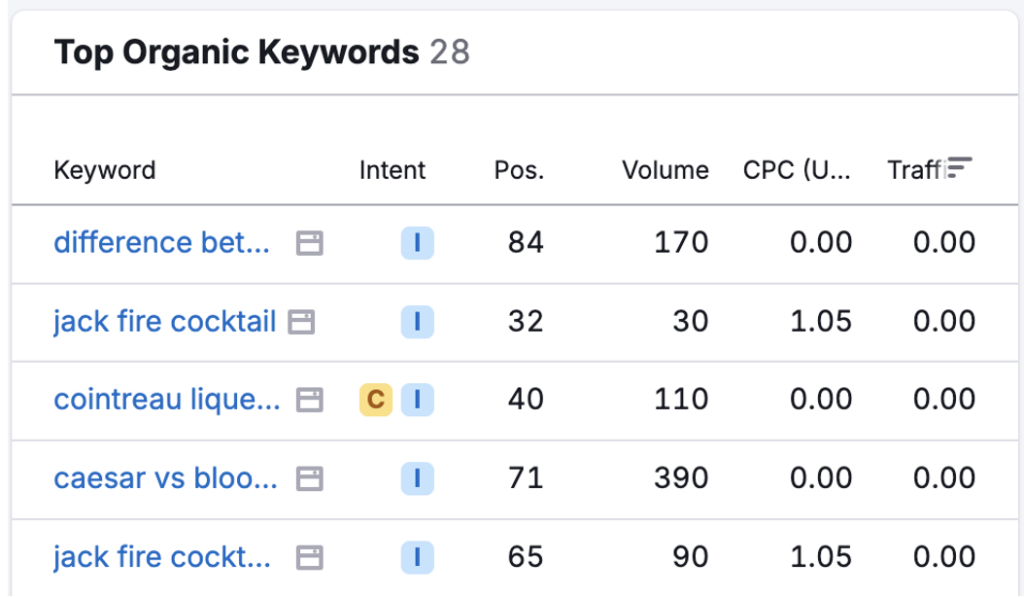
SEM rush made a selection of 28 top organic key words.
Most of the keywords are positioned far from the top results. For instance, several keywords such as “difference between…” (position 84), “caesar vs…” (position 71), or “jack fire cocktail” (position 32) are not ranking on the first page of Google. This significantly reduces the chances of attracting organic traffic, as users rarely go beyond the first page of search results.
Additionally, even when search volume exists (e.g. 170 or 390 monthly searches), the traffic generated remains at 0. This suggests that the current keyword positioning is not effective enough to drive clicks.
Overall, the keyword strategy appears underdeveloped, with low visibility and poor rankings.
Keywords Intent Analysis
The keyword distribution by intent highlights an important insight into the website’s positioning.
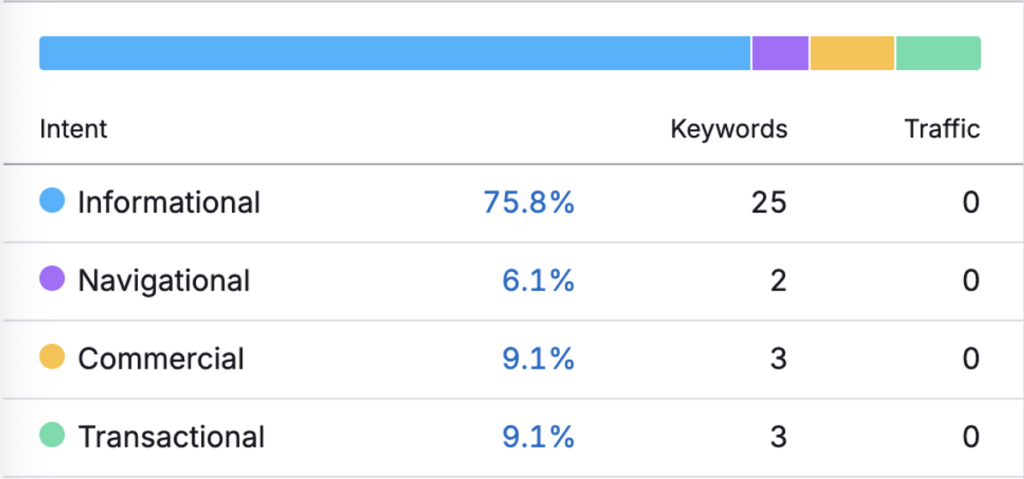
This clearly shows that the website is mainly targeting informational queries, meaning users are looking for content, explanations, or comparisons rather than making a purchase.
While this can be a good strategy for attracting traffic through blog content, it also has limitations. Informational keywords generally have lower conversion potential and require strong SEO performance to generate traffic.
Moreover, the lack of commercial and transactional keywords suggests that the website is not fully optimized to capture users with a purchase or decision intent.
SERP Position
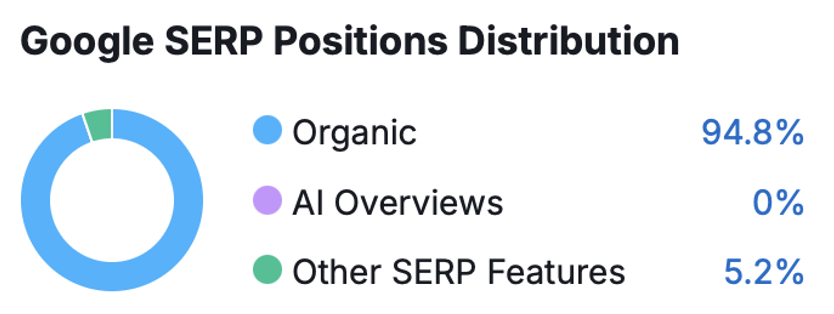
The SERP positions distribution shows that 94.8% of the website’s visibility comes from organic results, while there is no presence in AI overviews and only 5.2% in other SERP features.
This means that the website mainly relies on traditional search results and does not benefit from additional visibility elements such as featured snippets or enriched results.
However, this does not indicate strong performance. When combined with the low keyword rankings and the absence of organic traffic, it suggests that the website appears in search results but not in positions that generate clicks.
Organic Traffic
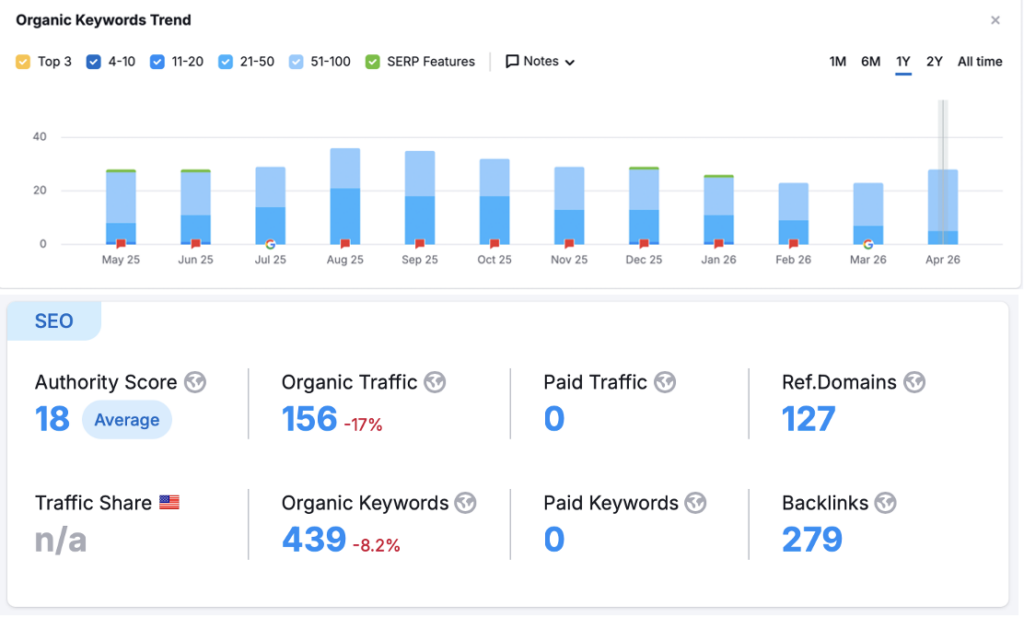
The website currently generates around 156 monthly organic visits, which is equal to last year. There is no significant evolution.
Despite ranking for a significant number of keywords (439), the traffic remains limited. This suggests that most keywords are not well positioned in search results and therefore do not attract users.
In addition, the absence of paid traffic shows that the website relies entirely on organic visibility, which makes its SEO performance even more critical.
Overall, the website has some potential in terms of keyword presence, but its low rankings prevent it from generating significant traffic.
Backlinks Analysis (number, toxicity, domain authority)
The website has a total of 279 backlinks coming from 127 referring domains, which indicates a moderate level of external linking.
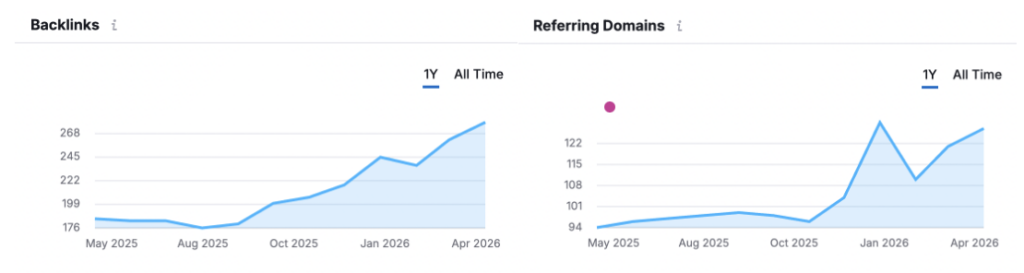
Over the past year, the number of backlinks has shown a steady increase, rising from around 180 to nearly 280. This is a positive signal, as it suggests that the website is gradually gaining visibility and credibility online.
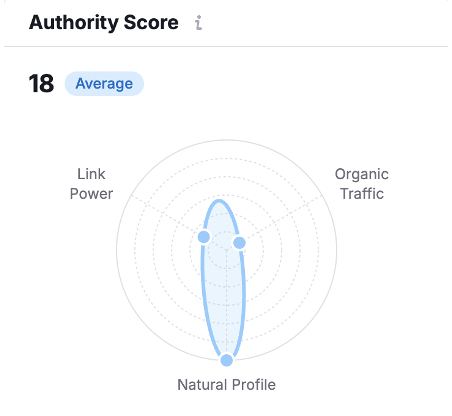
However, despite this growth, the authority score remains relatively low (18). This may indicate that the backlinks are not strong enough in terms of quality or come from websites with limited authority.
Overall, the website shows potential in its link-building strategy, but it would benefit from acquiring higher-quality backlinks to improve its authority and strengthen its SEO performance.
Technical Issues and recommendations
The Screaming Frog and semrush analysis highlights several technical issues that impact the website’s SEO performance. Below are the main problems identified and how they can be fixed.
Multiple H1 Tags
A large number of pages (355 URLs) contain multiple H1 tags. This can confuse search engines, as the H1 tag is supposed to define the main topic of the page.
How to Fix it:
Each page should contain only one H1 tag. Additional headings should be structured using H2, H3, etc., to improve readability and SEO.
Page Titles Too Short
Some pages (95 URLs) have titles shorter than 30 characters. These titles do not fully use the available space to include relevant keywords.
How to Fix it:
Titles should be extended to include more descriptive keywords while staying clear and relevant.
Page Titles Too Long
Several pages have titles that are too long (over 60 characters or 561 pixels), which may be truncated in search results.
How to Fix it:
Titles should be shortened to ensure they are fully visible on Google and remain impactful.
Duplicate Page Titles
There are 11 pages with duplicate titles, which makes it difficult for search engines to differentiate the content.
How to Fix it:
Each page should have a unique and descriptive title to improve indexing and ranking.
Heavy Images
Some images are too large (around 100 KB), which can slow down page loading speed and negatively affect user experience.
How to Fix it:
Images should be compressed and optimized using appropriate formats to reduce loading time.
Missing Canonical Tags
A significant number of pages (240 URLs) do not have canonical tags. This can lead to duplicate content issues and confusion for search engines.
How to Fix it:
A canonical URL should be added to each page to indicate the preferred version