Introduction
Luxury jewelry has always been a symbol of elegance, refinement and status. It was used by people from the high society, mainly aristocrats, royalty, and pharaohs, to show their status. By exploring the history of luxury jewelry, we will better understand how precious materials, craftmanship and cultural differences have influenced this prestigious industry. From ancient civilizations to today’s iconic maisons, luxury jewelry is still evolving while preserving its unique savoir-faire and heritage.
The Creation of Luxury Jewelry : Origins & Influences
Ancient civilizations such as Rome, Egypt, and Mesopotamia created the first forms of luxury jewelry. At that time, jewelry were not only used to decorate but mainly to demonstrate power, spirituality, and social status. Artisans valued gemstones, pearls and gold for their rarity and beauty.
Egyptian pharaohs wore elaborate gold necklaces and crowns. Roman aristocrats showed their wealth with rings and brooches. Over time, skilled craftmen developed advanced techniques and combined technical expertise with artistic expression. This period marked the beginning of what would later become the sophisticated world of fine jewelry.

Development of the Industry : From Royalty to High-Jewelry Maisons
During the Renaissance and the following centuries, the industry of luxury jewelry experienced significant growth. In European royalty, jewelers worked closely with aristocrats and monarchs to create unique pieces, reflecting their political power and prestige.
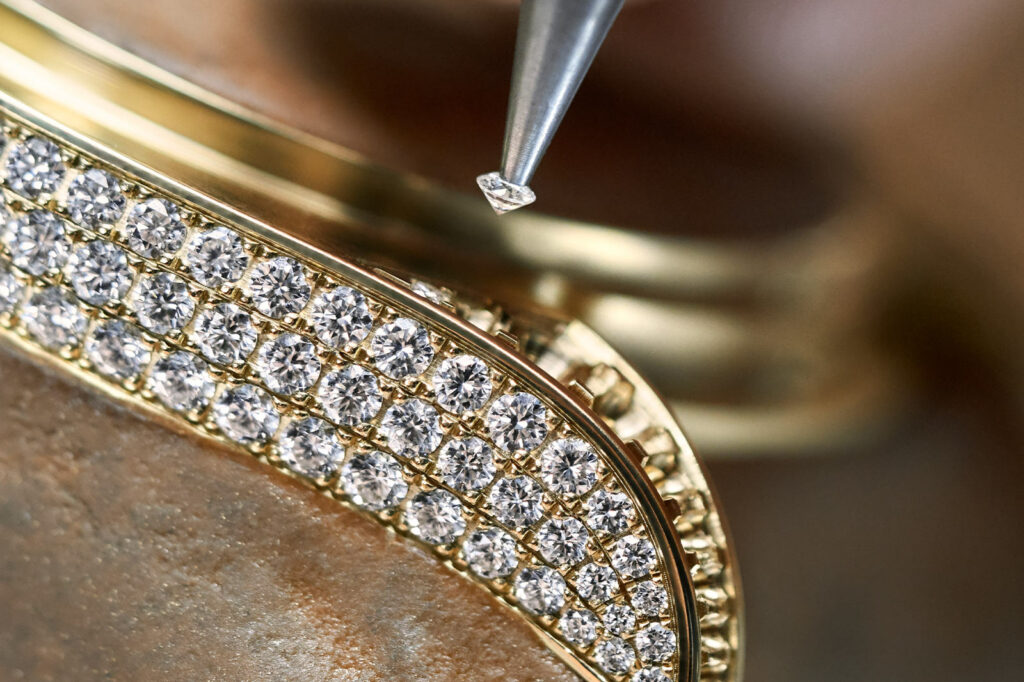
In the 19th and 20th centuries, iconic high jewelry maisons and brands emerged and transformed the sector, such as Boucheron, Van Cleef & Arpels or Cartier. These maisons combined tradition with innovation and exclusivity. Technological advancement and the appearance of new technologies also improved stone cutting and setting techniques, enhancing the reputation of luxury jewelry as a form of wearable art.
Luxury Jewelry Today : Sustainability, Innovation & Heritage
Today, the industry of jewelry balances innovation with tradition. While brands continue to preserve their heritage, they also add modern technologies and contemporary designs. Designers now use digital tools and 3D modeling to improve creation processes.
At the same time, sustainability has become a major concern. Indeed, many maisons are now focusing on ethical sourcing, environmental responsibility and transparency. Consumers are more and more looking for authenticity and responsible practices, reinforcing the importance of long-term credibility in the luxury jewelry sector.
Conclusion
The luxury jewelry history reflects centuries of craftmanship, creativity, and cultural evolution. Artisans, designers and maisons continue to transform this renowned industry. Luxury jewelries represent more than just accessories, they represent identity, heritage, and emotion. They remain a powerful expression of creativity, craftmanship, and timeless elegance.
Clara PENISSON