writer: yunju chen
Introduction
The history of luxury jewelry shows that jewelry originally served not only as a symbol of power, religion, and social status, but also as a crucial element of spiritual practices. Across early societies, such adornments primarily belonged to royalty and elites and played an important role in rituals and ceremonial life. In Egypt, gold formed the foundation of many luxury pieces. These were often combined with precious stones such as turquoise to symbolize eternal life.
This symbolic use continued into medieval Europe, where personal adornment reflected a highly hierarchical society. Social status strongly influenced the materials used. For instance, royalty and the nobility wore gold, silver, and precious gemstones, while lower social classes relied on base metals such as copper or pewter.
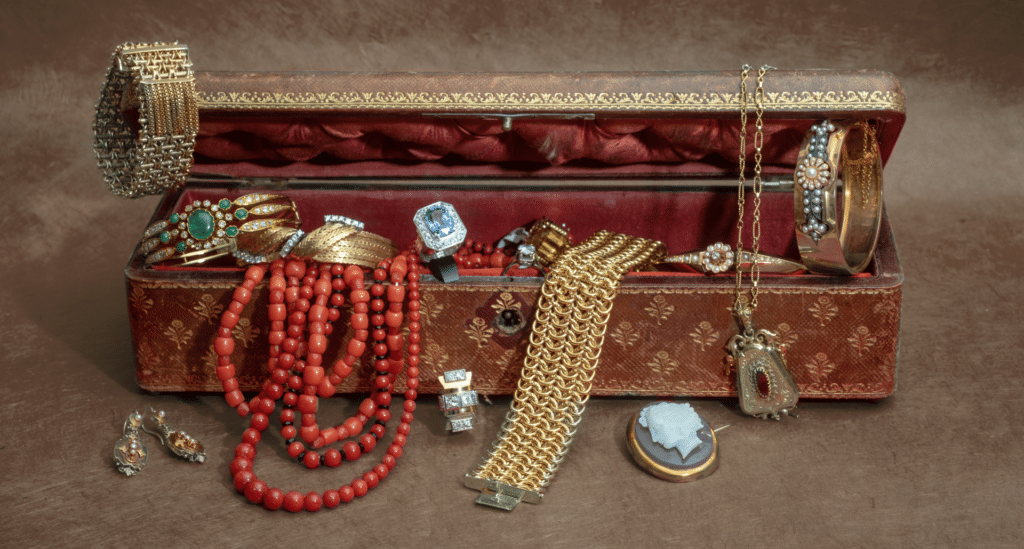
source: demcoquartz
IndustryDevelopment of Luxury Jewelry: From Craftsmanship to Industry
Over time, luxury jewelry moved beyond its symbolic and ritualistic role and gradually developed into a structured industry. After the Industrial Revolution, advances in production techniques improved efficiency and enabled wider distribution. These luxury goods were no longer created solely for royal courts and the upper class but began to reach a broader elite market. At the same time, the expansion of international trade allowed European jewelry houses to serve clients across different regions.
The evolution seen in the history of luxury jewelry marked a key turning point with the emergence of professional luxury brands. This transformation turned handcrafted work into an organized industry with established reputations and global reach.
Despite this industrial development, traditional craftsmanship did not disappear. Instead, it continued to coexist alongside more standardized forms of production, laying the foundation for the diverse luxury jewelry market seen today.
Luxury Jewelry Today: Market Segmentation and Values
Today, luxury jewelry operates as a global industry characterized by diverse production models and consumer preferences. A clear distinction exists between mass-produced and artisanal creations. Mass-produced luxury pieces emphasize efficiency, consistency, accessibility, and alignment with fashion trends, allowing brands to reach a wider international audience. In contrast, handcrafted works focus on individuality, superior craftsmanship, personalization, and increasingly on sustainable and ethical practices.
As a result, luxury brands in the jewelry sector cater to different customer segments, ranging from consumers seeking recognizable designs and global trends to those who value uniqueness and craftsmanship. This coexistence of production models reflects how the industry has adapted to modern market demands while preserving its traditional values.
Conclusion
These differences in production models highlight that luxury today is not defined by a single standard, but by the values consumers choose to prioritize. For me, luxury is defined by exclusivity, personal connection, and craftsmanship. This is one of the reasons why luxury jewelry remains relevant despite becoming a global industry.
For further reference on jewelry history, visit the British Museum collection: https://www.britishmuseum.org/